But let justice flow like a river,
and let goodness flow like a never-ending stream.
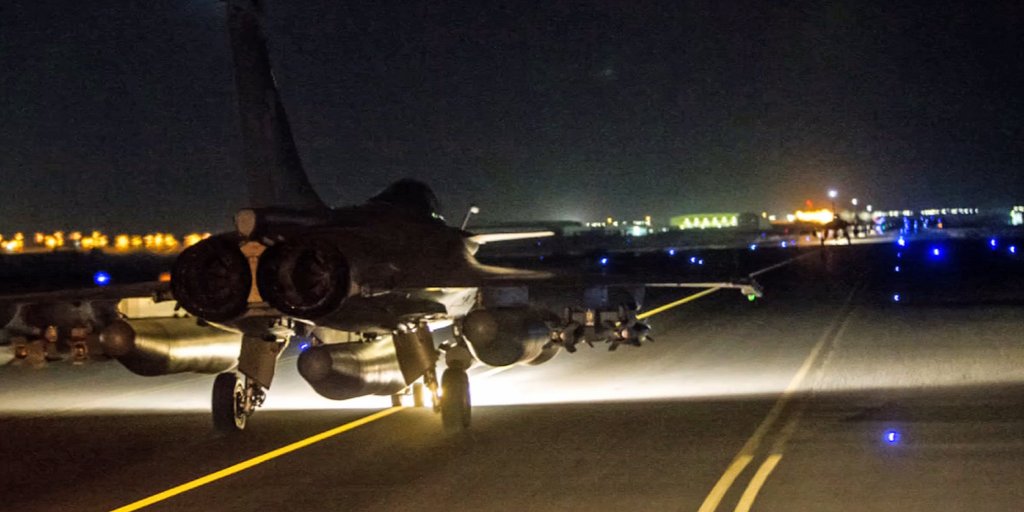
The Islamic State’s acts of hatred, cold-hearted, calculated murders, their disdain for life and history–all of this causes our blood to boil and a desire to whet our appetites for revenge. But more than that, many of us want this level of evil and hatred extinct. Especially after an event like what happened in Paris on Friday night. We all expect a response, and not just one with words but with guns, too. We have already seen that President Hollande has responded accordingly.
We grieve the actions of the Islamic State for several reasons, and it is important to understand why. After all, during this week alone, the Islamic State killed 19 people in a bombing during a funeral in Baghdad and more than 40 died in an IS attack in Beirut, Lebanon. Giving the media the benefit of the doubt, if the Paris attacks had not occurred, we probably would be hearing more about these in the news. But would we care as much?
It is a tough question to ask, and I am not trying to shame my society, but we need to think this through before we react, so we can understand why we want to react, and more importantly, to help us determine how we should react. Upon some reflection, these are some reasons why I think the Paris attacks have affected the world on such a global scale (in no particular order):
- IS carried out an attack outside their region. This makes us all feel unsafe. knowing that sleeper cells or whatever it was effectively carried out this attack reminds us of our vulnerability. Our safety has been violated, and we need to respond to reestablish our sense of safety and stability–at least until we can feel safe again.
- The scale and breadth of the attack was uncommon. Along the lines of the impact above, to hit multiple soft targets simultaneously confirms what we try to dismiss regularly — we are vulnerable. And, again, it is imperative that we feel safe. I’m not being sarcastic at all, we have consistently made it a priority to execute any actions necessary that we otherwise would not, all in the name of fostering a sense of safety.
- The brutality was horrific. These attacks were cold, calculated, and lacking any sense of humanity. Evil is the only way to describe it. These people sought out innocent people enjoying their city and having fun on a Friday night to show how ruthless they can be, to make us feel afraid, and perhaps, to see them as a legitimate enemy. And we are human, just like those victims. We mourn because we suffered a great loss. And we should mourn for this reason. We remind the families and friends of these victims, as well as all French nationals, that they are not alone. They have our attention, and we are calling out the injustice because we care. Genuinely, we do care. And because we care, we want to see the aggressors punished. We want them to know and to understand the hurt they caused, and we want them to feel hurt as well. More than just being afraid and feeling vulnerable, our hearts are broken.
- IS attacked “one of us.” Well, who is “one of us”? Unlike the ‘us’ I mention above, the human race, this reaction seems to be laced with indignation. This might address why we get more upset about Paris being attacked, or Christians being attacked in some instances, than when say, another bombing has taken place in a Middle East nation. This implies a double standard at its best, and recalls superior, imperialistic intentions at its worst.
I am sure this is an incomplete list of reasons we are upset by the Paris attacks, but it touches on some key reasons we feel the need to respond: to reestablish our safety and stability, to carryout revenge, to reestablish justice, and to reestablish the preeminence of Western civilization.
But what if why we react determines how we respond? Does it matter? If we respond to the Islamic State to restore our sense of safety, I’d predict we are endeavoring upon a very short-term action with a temporary solution. Once we feel safe, we will discontinue any military action. If we want revenge, we will continue until we think they have had enough or have been made to feel what we felt–tit for tat. And if it is an attempt to assert our nationalistic sentiments and “show them who’s the boss,” well, we have hundreds of years of history to show us the outcome of a punitive approach.
But what if we want to establish justice? Justice requires a value system, a culture that desires justice. And that justice must transcend Western values lest it merely be an extension of our sense of nationalism and cultural imperialism. I cannot offer a concrete solution on what our procedures should be. I will not pretend to be a military or diplomatic expert, which is why I also cannot say, “Let’s bomb them all.” After all, who is “them”? All IS supporters? All radical Muslims? All conservative Muslims? All Muslims? All people not like me? If this is just a war on “radical militant Islam” then it is limited in scope and in victory. It should also be noted that if our response involves a continued criminalized view of Syrian refugees we will have already lost the good vs evil war.
I do not know what exactly should be done, but I imagine it would involve helping people build one another up and cultivate a society that values everyone — something we are still working out amongst ourselves.
Historical responses haven’t really aligned with our rhetoric. Establishing justice looks different from our historical, punitive, vengeful, temporary endeavors. It would involve long-term relationships, social and cultural investments, and a generational vision.
As we grieve with Paris, Beirut, Baghdad, and so much of the rest of the world, let us reflect on why we mourn, so we can respond appropriately. Paying off or blowing up enemies simply cannot suffice any longer.
 Unbreaking the News
Photo credit: https://twitter.com/stuartdhughes/status/666010395119886336
LikeLike