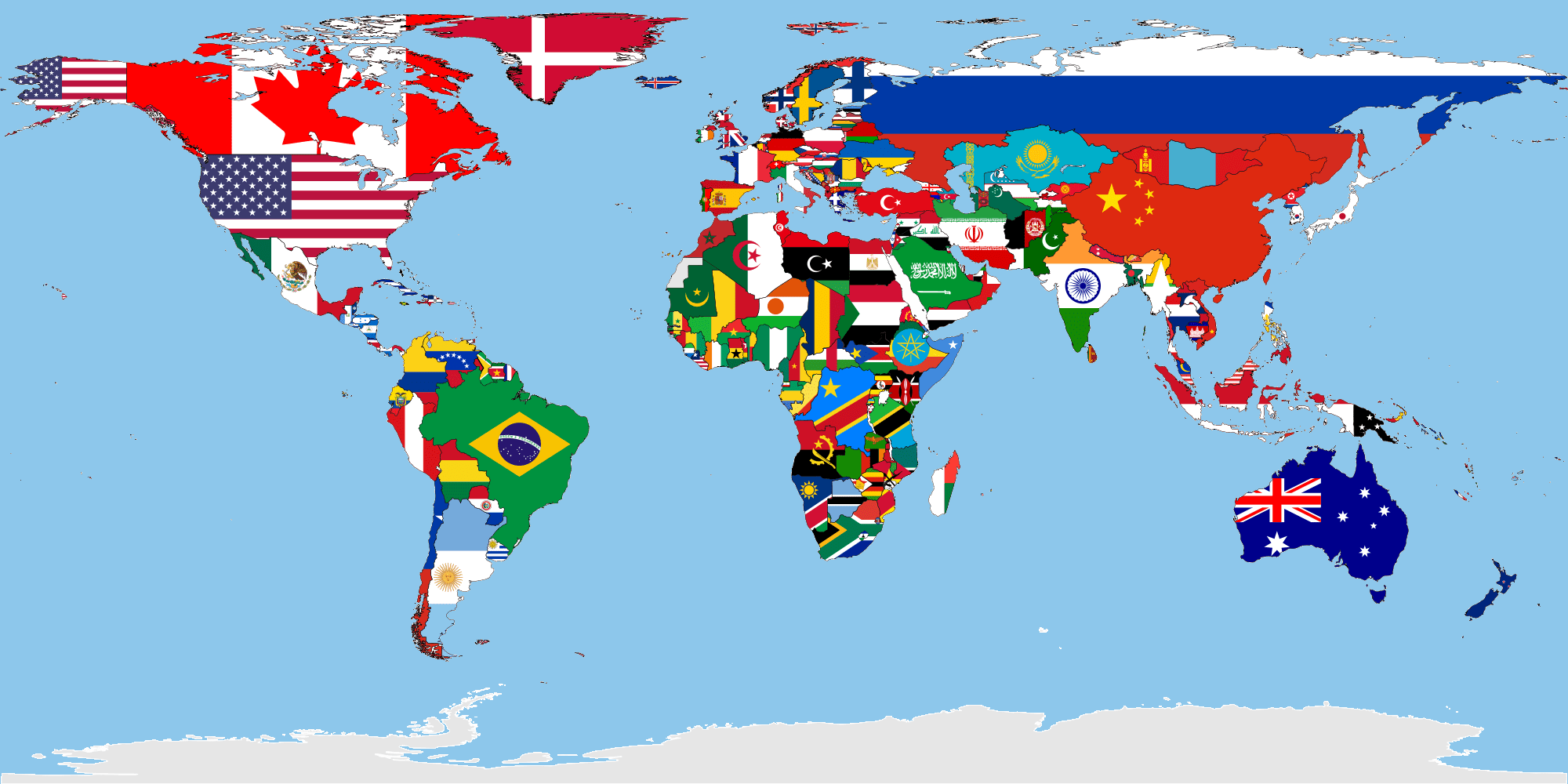
“Patriotism is idolatry of a place”
Full disclosure: I have pride in my country, and since nationalism is in essence, pride in one’s country, I must be a nationalist. After all, I come from a military family and understand the significance of pride and service to one’s country. I read our Constitution and get excited when I think of the brilliance that went behind such an ingenious and creative document — I mean, break up the powers, create checks and balances, and the legislators aggressively limiting the power of the government — it’s incredible. Yes, I geek out about it, but I am incredibly proud and grateful to be a participant in such a democracy. No, it’s not perfect, but it has been brilliantly crafted and worth protecting.
That said, I think nationalism is poison. And here’s why: A poison is generally a foreign substance that causes illness when introduced to the body. It can cause various systems to shut down or not function properly. As we become a more international and global society, nationalism is proving to prevent the larger system from functioning properly. Here’s my case for putting nationalism in the back seat:
One statement I cringe upon hearing, and actually loathe to hear, is “For God and Country.” As a Christian, “for God” is perfectly acceptable, as long as the actions are supported by my tenets of faith which is to actively love God and fiercely love others as I do myself (Thus countering such extreme acts that would cause harm in the name of God). But to put my country up there with God? Well, that breaks a commandment, first of all, but second of all, to deify something means to see it as an absolute, unable to do wrong. Once something or someone has been deified, we have a very difficult time admitting its failures, and have to spend a lot of time and effort blinding ourselves to its failures and coming to its defense.
Indeed, nationalism is a source of great help to a nation in conflict with another country. It can make or break a war. However, that is one nationalist country against another nationalist country. Who should win? During World War II and the Cold War, the West successfully integrated nationalist pride with their Christian faith. To critique one’s country meant to deny one’s faith, and then we are suddenly talking about eternal consequences–thus, “For God and Country.”
And there are always losers in conflicts. One nationalist country must yield to another to end a war. This cannot end well. And this is why I call it a poison — nationalism corrupts our political systems and ideologies to such an extent that it becomes nearly impossible to detox and live without that sense of superiority. So what happens when a nationalist nation loses? Post-WWI Germany is the clearest historic example of the consequences of a defeated nationalist country. Hitler swore to make Germany great again (yikes), and many know how the rest of the story transpires. Below are some other contemporary examples.
Russia – While the Cold War was very much an ideological conflict, those ideologies were indistinguishably intertwined in countries’ identities. When the Soviet Union collapsed, what remained was a humiliated Russia. Humiliation is simply wounded pride, and when the wounded pride involves one’s identity in his or her nationality, the humiliation is not easily alleviated. If we perceive the end of the Cold War not as a defeat of an ideology but as the crippling of a Russian Empire, it becomes much easier for one to understand what is currently taking place: A humiliated country attempting to reassert itself as a legitimate contender for superpower status. Why does Russia persist in this attempt? Nationalism — to restore the honor and pride nationalist countrymen have desired for over twenty years.
Japan – Kamikaze and suicide rituals are rather well-known practices of Japanese soldiers during World War II. In my Global History classes, I taught that this was entrenched in their centuries-old nationalist identity. It is naive to believe that those nationalist tendencies were resolved after a crippling defeat at the end of WWII and the emperor denouncing wartime acts. Today, the democratically-elected Prime Minister Abe and his many supporters are deliberate in their attempts to end what they consider the demonization of their ancestors’ wartime acts. Seventy years of post-war history and rebuilding does not redefine previous centuries of extreme loyalty to the national identity; in fact, the rebuilding efforts oftentimes legitimize their desire to be seen and respected as a dominant power in their region.
Turkey – Like Japan, Turkey has a centuries-old history steeped in legacy and glory — as the Ottoman Empire. After the defeat of the Ottomans in World War I, the empire was left in shambles until Young Turks sought to revive to Turkish identity and legacy. Attempts to establish a Turkish identity in that country has led to extreme secularization (to separate the Islamic faith from the Turkish ethnic identity), denial of the Armenian genocide, and a constitution that is deliberately and explicitly blinded to any ethnic diversity within its borders. Thus, large ethnic minorities such as the Kurds are virtually denied their existence. Regarding the Kurds, this tension between Turkish nationalism and the reality of the region’s diversity have complicated matters that involved Turkey providing assistance against the Islamic State. The Turkish military has used the chaos in the region to launch several attacks against militarized Kurds, who are also fighting IS. Furthermore, these nationalist tensions make it worth closely watching how the bombing of a Russian warplane by Turkey will unfold in coming weeks and months.
United States – We have not outright lost a war with another country, and that has shaped our identity in real and tangible ways. It is very much part of the American psyche to see ourselves as indestructible. Even in our comic books, good always defeats evil, and we have crafted a narrative of being on the good side of history many times over. It is nearly impossible to even entertain the possibility that we would lose a conflict, but if we did, what would we do? With little hesitation, if any at all, I say that we would fight back to reassert ourselves and continue the narrative of good triumphing over evil. American nationalism is evident in a range of issues ranging from our trade agreements to the Syrian refugee crisis to our dreams to our individuality. However, American individualism is a product of our frontier-taming, enterprising efforts more than an evolution of human ingenuity. No one nationality is superior to any other.
I know this is a hard pill to swallow. I am not under the presumption that any of this will persuade most nationalists to abandon their jingoism, and there are plenty of arguments and justifications for placing our country before other nations. At the very least, to do the opposite could be seen as treasonous according to the Constitution. However, if we cannot realize and identify the social and national constructs that shape our national identity and that our human nature transcends any manufactured identity, we cannot make any effectual attempt at resolving the issues we cite as needing to be addressed. The superiority celebrated by any nationality is merely what makes them unique–not better than someone else. Our arbitrary barriers can only perpetuate tensions and conflicts.
 Unbreaking the News
I can understand your concerns about nationalism, and I’m kind of in the same boat; I admire my country’s past and current triumphs and achievements, but I lack fervor. I agree that nationalism can bring on a number of issues (like in the places you’ve mentioned and, adding to the list, North Korea) but this all raises a good question: is nationalism the poison, or is ideological extremism, in any form, the real poison?
LikeLiked by 1 person