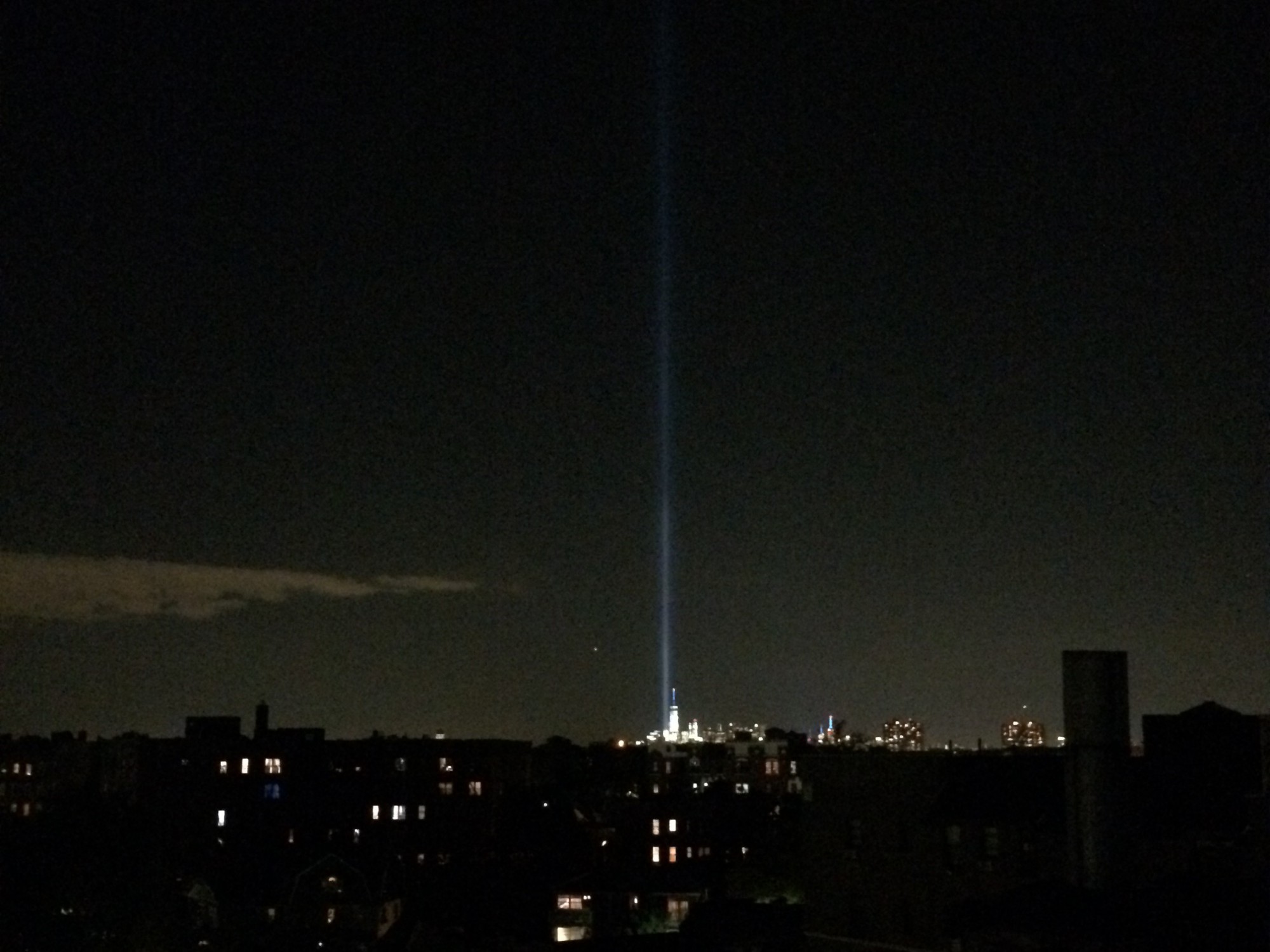
I wonder how this will be remembered in future generations. When literally the light has faded and 9/11 is discussed in classrooms as a turning point, like the burning of Washington in 1812, the sinking of the Maine, or Pearl Harbor–a bookmark in history that led us into a new era. Students might spend part of a class period looking at how foreign and domestic policy shifted. We might teach a victorious narrative, because that’s what a nation does with those frail moments. We talk about how we rose up, responded with force and with greatness. But for now we remember the frailty, our mortality, and we look back with pain, and we get to look forward with hope. That is what is unique to living through an historic turning point. We remember the humanity of the event and not just the facts. So when we hashtag our remembrances and our memorials, we are doing it to leave an imprint for future generations to know that we felt this moment.
We still feel it because we choose to–for some it is so not to forsake the ones they lost, for others it is out of survivor’s guilt, and for so many who witnessed it from a distance, we choose to feel it again every year because it changed us. We can remember the moment when it shook us to the core and altered our timelines. While we may wish we have never lived through such an event, we now carry an incredible responsibility to choose how future generations will remember the lights and what had filled their footprints. And why they should remember it. Let’s always be mindful of the narrative we are writing for our children’s children.
 Unbreaking the News