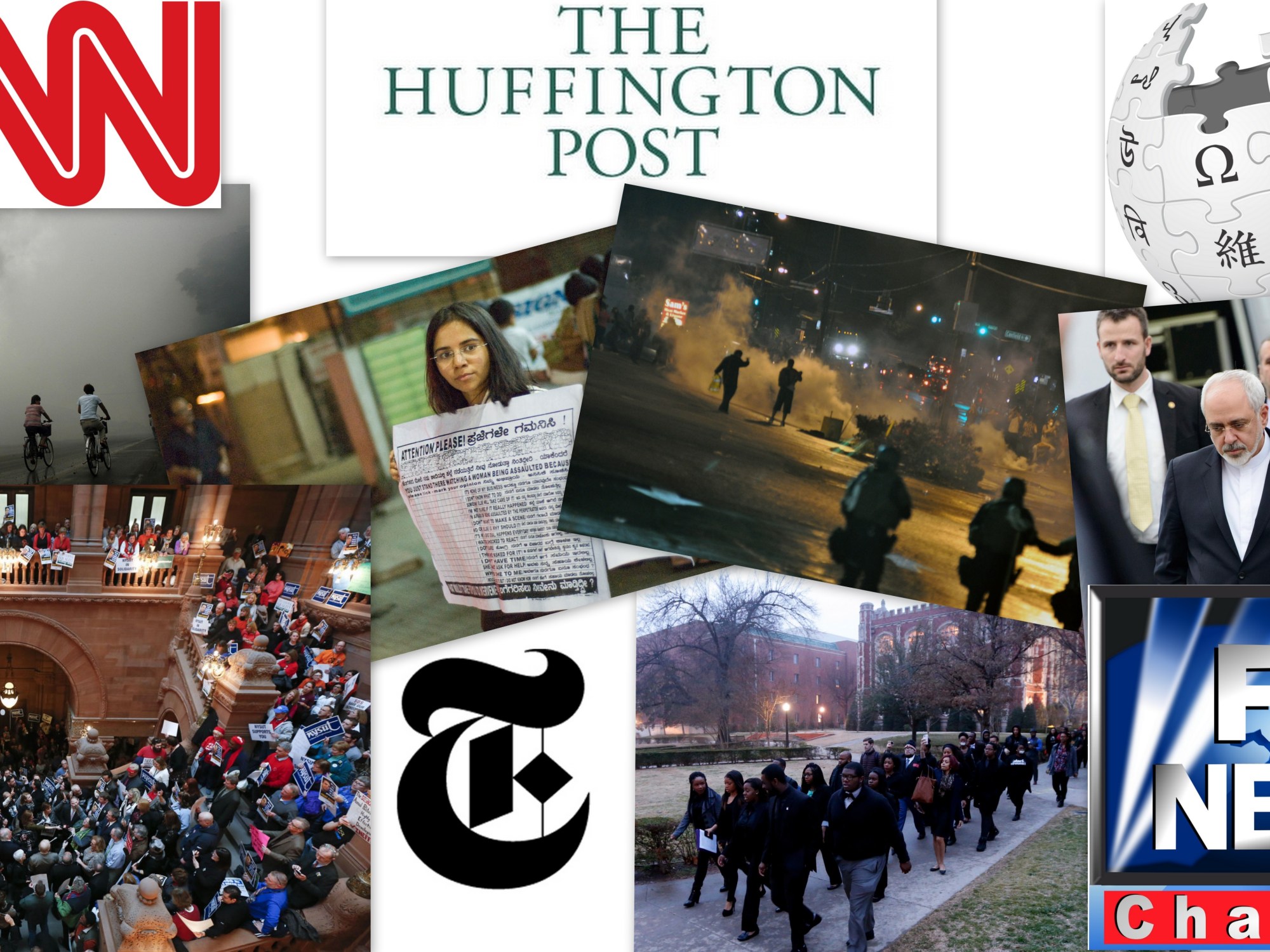
Every year, my co-teacher and I brainstorm a way to try to get students to watch or read the news. Every year the technique is different: weekly current events presentations, biweekly write-ups of an event in the news, finding a current event that connects to what we are studying in class (it’s a world history class, so there’s always something). This year the idea got pushed to the back burner due to our daily curriculum updates mandated by some politician somewhere (hyperbole, but you get the point). But every year, the struggle is real. How do you get teenagers to read the news? I would die a little inside whenever a student said, with a little too much pride, “Mister, I don’t watch the news.” Well, read it then.
I have similar reactions when “grown up” grown-ups say the same. It’s as if not following current events is an ongoing joke. And some have a real clever response about how biased news is unreliable, so we shouldn’t follow the news out of protest. Others genuinely are disturbed by what is taking place in our country and world today, and just choose to shut it off. The latter is more understandable than the former, but there are scores of various other excuses between these two. And yes, news media can be awful, and dramatic, and violent and disturbing, and so many other things. And yes, so many news agencies have gotten better at sensationalizing an event than presenting the news itself. But I still urge my kids, and anyone I can convince, really, to follow current events.
Perhaps it is just because my hobby and passion is current events. I really cannot read up on fewer than twenty events a day. Partly it has to do with my desire to be informed of as much as possible, but also because of the impact of knowledge. Knowing about what is happening locally, nationally, globally, provides more than interesting bits of trivia and conversation pieces. The benefits of this current knowledge can help us, as we tell our students, to make informed decisions.
It was a real challenge this week to choose a topic to write about — a specific incident of racist speech or actions (i.e. Ferguson, MO or an Oklahoma University fraternity), gender equality (in light of International Women’s Day), the tug of war between our executive and legislative branches, Gov. Andrew Cuomo’s ongoing fight to wrest educational power from local schools, or a host of other important, or perceived unimportant, topics and issues. But really, more than reading my own thoughts about these issues, I would encourage you to read about all of these issues yourself. Even from Fox News (only if you promised to also consult one other source–teacher advice).
But again, why news?
Let’s first explore the argument for why not news. Well, one of them. People are often genuinely pained by reading or watching the news. They hear about a disturbing event, and a person with a full heart, cannot bear the frustration and anguish of “not being able to do anything about it.” Well, there are many things you can do about it. Here are three:
- Put your money where your heart is. If you are disturbed by a social justice issue, chances are there is someone out there trying to put a stop to it, and it cannot be done for free. Organizations across the political spectrum work to push for change. And while I hope that you research the recipient of your gift, and while I hope it is going toward something other than Citizens United, it is money that has been placed in your pocket, and you can invest and build what you want. Just put some thought and consultation into it.
- Put your feet and hands where your heart is. Very likely, you could be the person to bring about the change or reform you want to see happen. I’m working hard to avoid quoting a Gandhism that he never made, but it is true. While you could support an agency, those agencies got started because someone, somewhere, decided to get their hands dirty. But it needn’t be too grand or heroic. Standing up for a victim of hate speech of dishonoring behavior or words on the train (or whatever your commute may be like), in the work place, or heaven forbid, at the dinner table, is being an agent of change. Just remember: Give honor, always. It’s an invaluable currency.
- Put your mouth where your heart is. Yeah, that sounds odd, but I was shooting for some parallelism on my bullet points. But it pretty much means what it says. Share, inform, speak, get on your soapbox. If you do it in an honorable way, and respect the voice given to you, people will listen. The more you read about, the more you can inform the uninformed, and they, too can become agents of change, and you can refer them to these three points.
Again, knowledge is not meant to be for your own ability to be a walking encyclopedia and to be the best at Trivial Pursuit, but it is meant to change and reform our society. That is one reason we chose to invest in a public education system two centuries ago. It was an investment into society. So, please, don’t shy away from the news because it is too harsh or too dark. If it is too dark, turn the light on it.
And if the news organizations themselves frustrate you, just remember how you eat chicken (Seriously). Eat the meat, leave the bone. Don’t choke yourself. I heard this analogy used in another situation, but it makes sense, doesn’t it? You can even watch biased state-run media from North Korea and get something out of it (that they desperately need Truth, at the very least). Or, maybe start compiling and pumping out the news yourself?
When my students counter with a comment about following the news not being their “thing.” I push back. Sometimes relentlessly. I bring up the Enlightenment and the revolutions that spread from sharing information; I mention the rapid advancements that spread due to the news of industrialization in England; and I bring up the Holocaust–how important is the spread of information to prevent these atrocities. The value of being informed goes beyond our immediate circles. Friends, families, and other generations are impacted by how much we know personally. I challenge our students not to disengage with the world. Living in a bubble limits your impact. Instead, engage fiercely. I’ll remind my students of this again in the morning.
 Unbreaking the News