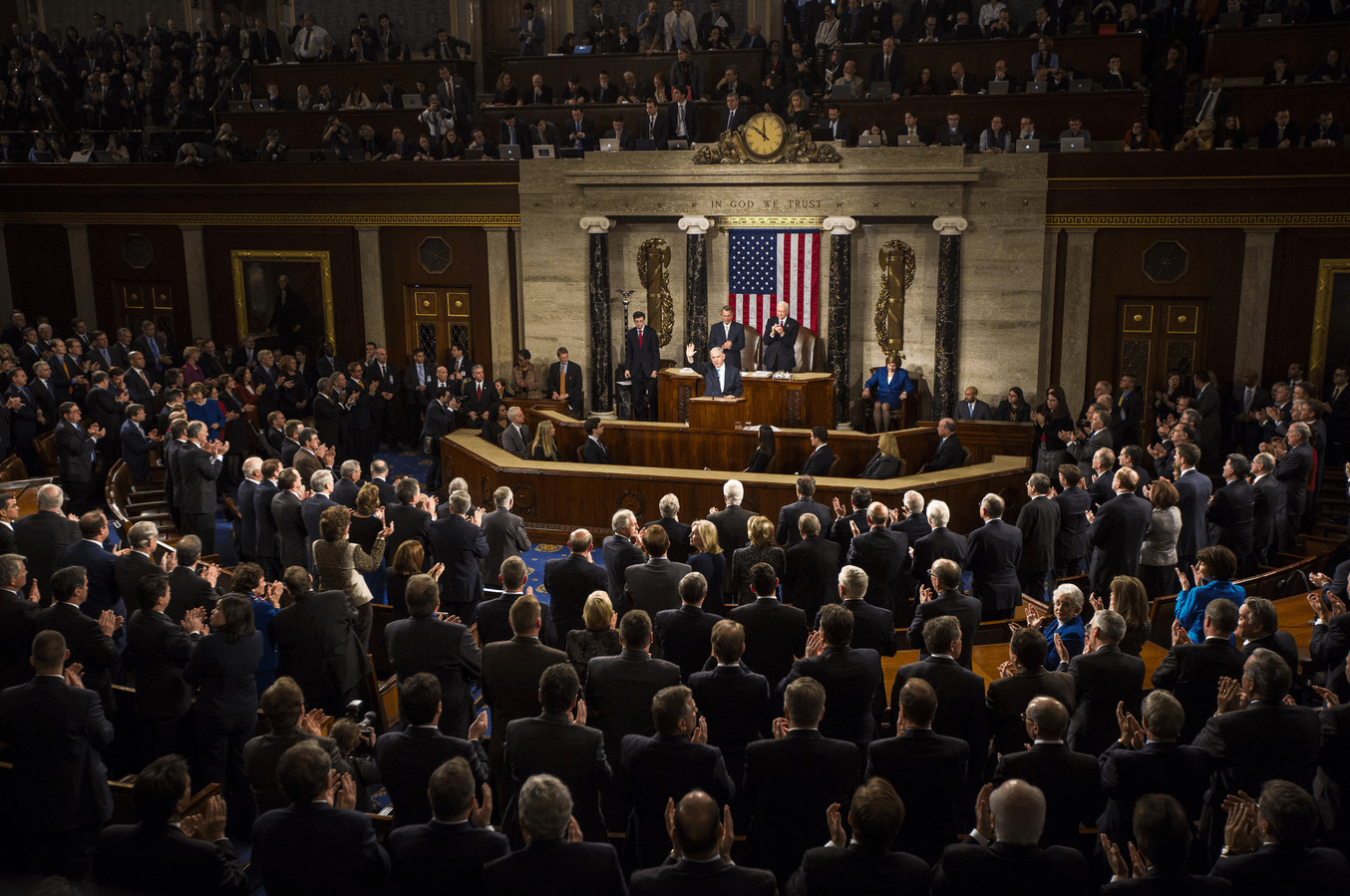
The news was all over this one yesterday. I’m grateful that that dress made its debut Sunday night, so that it could fizzle in time for us to have a chance to have some real thought over the political implications of Prime Minister Benjamin Netanyahu’s speech to Congress. Though this might quickly fade for us, too, unfortunately.
But for those who may have missed it, or for those who have been hearing praises or criticisms on Netanyahu’s speech (depending on your source for news), I wanted to unpack the reasons for this speech as well as some of its possible implications and its newsworthiness.
Partial disclosure: It is very likely that some of this will come across as biased, but I’ve made no promises on being completely objective here. I think this was an imprudent move, yet advantageous for Netanyahu and Israel’s foreign policy objectives. But my goal here is to provide information about an historic moment without sensationalizing it for increased viewership.
First of all, what makes this historic? Well, it was not because a foreign leader addressed a joint meeting of Congress. That happens quite frequently. It isn’t because an Israeli leader addressed Congress. In fact, Netanyahu himself has addressed Congress three times, now. And many foreign leaders have spoken persuasively in order to convince our legislature and president to adopt a particular position and strongly encouraged specific actions internationally (Winston Churchill and Nelson Mandela). We have even had someone criticize our president’s foreign policy while in the midst of an international quagmire (General MacArthur did not mince his words when talking about Truman’s policy in Korea and China when he was invited to speak).
No, this was historic because of how Netanyahu’s arrival to the podium strayed from precedence, tradition, and protocol. And that is why we actually knew that a foreign leader addressed a joint meeting of Congress. This gained traction on the newsreels due to the partisanship behind Netanyahu’s invitation, the advantageous timing of this speech, and the overall theme of the event. So let’s unpack this:
This was clearly motivated out of the tension between the Congressional Republicans and the White House. On January 20, President Obama presented his “State of the Union” in which he stated that he would veto any attempt to tack on more sanctions on Iran as the US continues diplomatic talks with Iran. On January 21, Speaker Boehner invited Netanyahu to speak on February 11, without consulting the White House or the State Department, which is standard protocol. Boehner explained that he wanted Netanyahu to play a role in jumpstarting a “real discussion” on the threat of growing terrorism around the world. While we cannot question his motives, we can question his methods. In my research, I could not find another instance of Congress inviting a foreign leader to speak to a joint meeting of Congress without consulting the executive branch. If you know of an instance, please comment below, and I’ll update the post accordingly. While Boehner may have genuinely wanted to start a dialogue about the nuclear talks with Iran and terrorism, ignoring the White House rings of partisanship and political maneuvering.
Originally, this speech was scheduled for February 11, but Netanyahu wanted to reschedule the American Israel Public Affairs Committee’s annual meeting in Washington. This possibly was genuine, but the rescheduled date placed his speech 10 days before Israeli elections, in which he is participating. Again, we cannot question the motives behind the date change, but the impacts will be notable. Netanyahu was quick to note that this speech was not meant to be political in nature (neither to snub Obama nor to gain some votes back home). However, calling a key part of the White House’s foreign policy a “bad deal” and to say that as long as he is prime minister, Israel will stand against aggressors with or without the US imply political rhetoric in less than subtle ways. And both of these statements will boost support for his campaign among those who want to vote for a strong leader who will stand up against aggressors and allies alike for the sake of his country.
I kept trying to think of an adequate analogy to illustrate the spirit behind this speech and why it made the news. But it really depends on your political leanings and point of view. This could either be seen as a mom inviting another family’s dad into her home to explain to the kids why their dad is so bad (a house divided) or as a mom bringing in Child Services because of a neglectful father (intervention). Both have me cringing out of discomfort, though. Perhaps this is an instance of the means un-justifying the end.
We welcome discourse and value the variety of opinions that can exist in our country. We understand and expect leaders within our country as well as from other nations to disagree on tactics and policies. But perhaps the greater threat right now is not against our national security but against our hope for a successful, cooperative future, both domestically and internationally. Still, the criticism cannot be directed toward Netanyahu. He represents a country that daily feels threatened by a country that has consistently pushed forward a hateful and genocidal rhetoric against his country. He is going to disagree with the US pursuing peace talks with the enemy, and he is going to use every opportunity to push forward his agenda. No, I think the criticism lies in our efforts to undermine our domestic political enemies, who aren’t really enemies at all. If we can view the political “other” as an honorable counterpart instead of an enemy, it could perhaps encourage discourse and give the media a little less to sensationalize. And then we could really have that imperative discussion about national security, the threat of nuclear terror, and how to approach and address Iran.
We’ve still got to resolve the issue of an Iran that wants to become nuclear, whether for military or civilian purposes. And we must rethink alliances and vision for the Middle East with wisdom and an understanding and appreciation for the diversity of the region. We can learn a great deal from one another, whether strangers or political foes, that could potentially advance cooperation and discourse at the cost of fear and hatred. And this is what could have come from this speech, but unfortunately it came dressed up as politics.
 Unbreaking the News