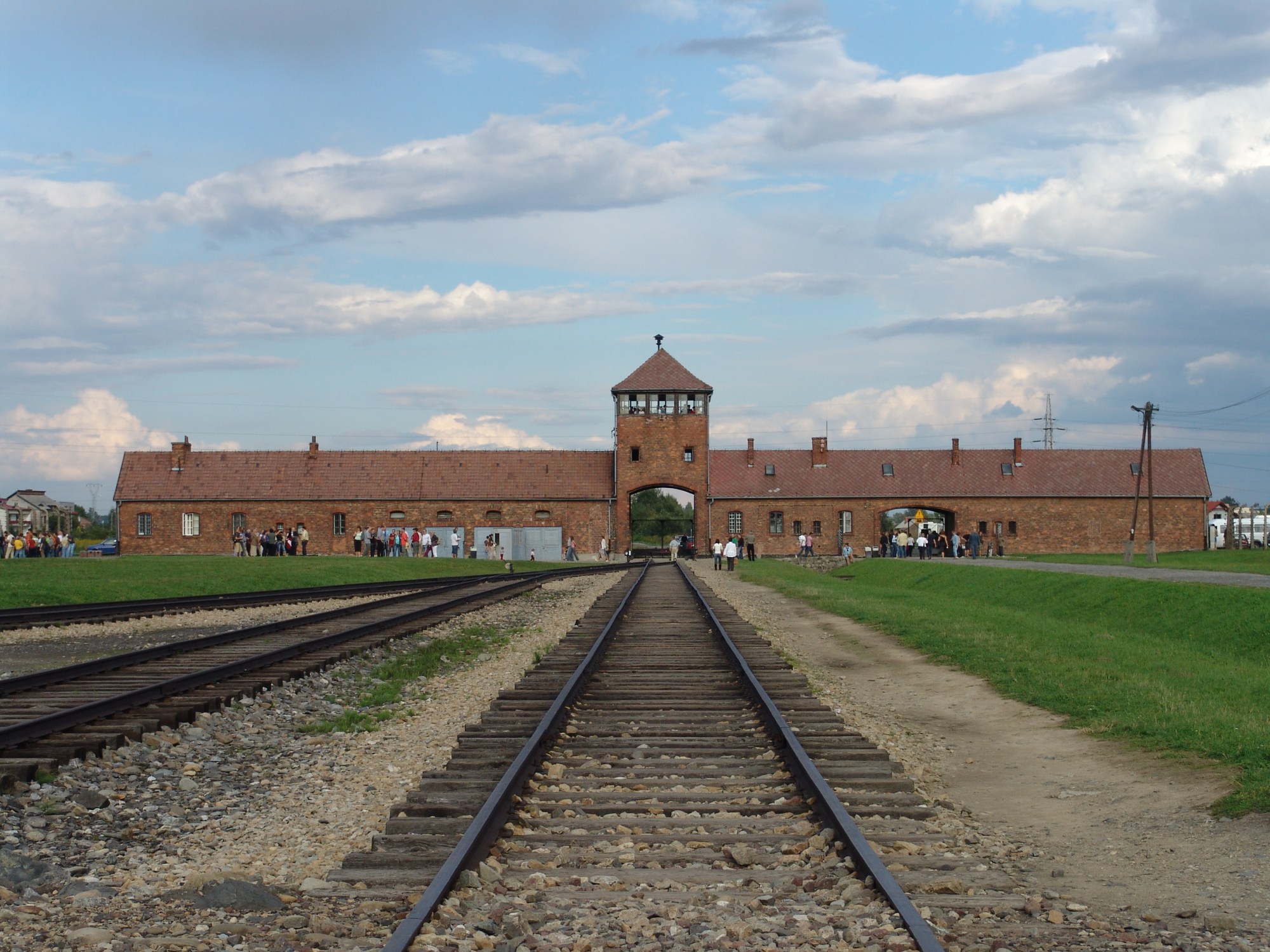
A few months ago, my wife and I were discussing something I cannot recall, but it led me to ask her what she thought was the worst or darkest event in human history. In typical fashion, she turned the question back to me as if I had an answer in mind when I asked, and, in typical fashion, I didn’t. But the first thing that came to my mind was the Holocaust.
Once I shared my answer, immediately several other dark periods of human history came to mind, and my wife, who knows so much more about Medieval Europe than I do, shared other possibilities from that time. But the more I thought about it, the more I stuck to it. This is why:
We evolve. At least, that’s the traditional argument. While I think we are equally responsible for our (humanity’s) actions from yesterday and thousands of years ago, a development of societal actions and values has been documented fairly well for the past few thousand years When we hear of all the terrible events and practices of our ancestors, we tend to shrug it all off as ignorance. They didn’t know any better. We differentiate ourselves by saying today value life in ways and to an extent that we never have in human history. Today, we treasure both sexes, the able and the disabled, the young and old, the Jew and Gentile. While I think we have been just as capable of good then as we are now, I would also say our understanding of a universal sanctity of life has been elaborated and expanded over the course of civilization.
Well, social evolution, while it develops much more quickly than biological evolution, does not happen overnight. It took tens of generations to reach our Age of Enlightenment in the 17th century, and a few more generations for that to reach across race and gender. However, by the time we reach the early 20th century, we had reached our pinnacle and thought ourselves at our moral best. Murder was wrong, people were equal (at least in ideas and words, though perhaps separate still), and we had “outgrown” our savage ways. We had become the modern man.
So why would such a modern man–and by man, I mean humanity–do such a primitive act as to try wipe out an entire human race? I carry no ancestral guilt, but more than just a few Germans were responsible for this. In fact, the U.S. is traditionally considered the birthplace of the modern eugenics movement that many argued had served as an inspiration for Nazism. And anti-Semitism predates any existing civilization, and anti-Judaism goes back at least 1,500 years in Europe. So, while there have been many terrible events that came before and even after this event, this has to stand out due to its magnitude and its roots.
And there is something to be said of the hate involved in the act. I don’t understand hate. I’ve been privileged to have been sheltered from hate and have not been in a situation in which I felt it necessary to hate. But I can recognize this as hate.
My co-teacher and I were reflecting on why Hitler gets so much more focus than Stalin in our curriculum since Stalin indeed killed many more innocent people than Hitler. While theories and opinions abound (including Stalin was an ally during the War), the extent and propagation of hate must have some role. Stalin eliminated obstacles and threats and did indeed kill out of hatred, but Hitler taught and proselytized hate. People learned and began to hate because of him, his words, his actions, and his laws.
But what makes this even darker was that he was standing on the shoulders of a movement that had been growing before him, and strengthened underneath him. You cannot grow a movement without fertile soil. This was Hitler, but it was also a generation, and its tentacles wrapped around the globe. I’m thinking specifically of the eugenics movement and the hostile attitude toward Jews mentioned above. It was indeed, global.
So that’s why I say it was one of our darkest moments. We–humanity–should have known better. In fact, we did know better, but it happened anyways. Only 70 years ago.
But never expect me to end a post so dismally. I believe every bit of darkness will eventually be exposed to light. Not only are there stories of resistance and opposition during that time; we have learned. We know what happens if we allow sensationalism, nationalism, isolated human logic, and hate to go unchecked. We have made it our mandate to call out those on a path of hatred before they go too far and to protect those who are not able to protect themselves. We are not perfect at it yet, but we are getting better. We’ve let opportunities slip past us (Rwanda, Darfur, Cambodia, North Korea), but I would argue we have more tools before us than ever before to lessen and prevent future crimes against humanity. Perhaps as borders become more and more meaningless, hate will have less of a foothold. Just a thought.
So going forward, our greatest enemy is apathy. We can only experience an event darker than the Holocaust if we do not learn from it. To consider an event too distant geographically or temporally to concern ourselves will become our greatest crime. Every moment in history is teachable, and as long as you are learning, you’ve taken a step to protect yourself from indifference. This is my greatest challenge as a teacher–more so than socioeconomic obstacles or limited time to teach students or a curriculum that ends in a test (there’ll be a post on that one day soon)–to get teenagers to care about something that preceded them nowhere near where they live. But that is what will protect forthcoming generations.
Today, seventy years ago, Auschwitz prisoners were released from their hell on earth. We always say we will remember, but let’s not just remember the event, or the people and their stories, but let’s also remember to care. It is the greatest weapon against hate and apathy.
To remember the event, here are some resources. Please share them with friends and family:
- The Holocaust Memorial Museum has scores of personal accounts as well as lesser-known events during WWII, both inspirational and disturbing. They also have a special feature to commemorate the anniversary.
- CNN has a special feature to commemorate the 70th anniversary of the liberation of Auschwitz.
- BBC has a great article about the memorial ceremony and survivors’ call to combat new crimes against humanity.
- The Atlantic Monthly‘s feature is done through imagery.
- Simply do a Google search of “Auschwitz” to find additional materials.
 Unbreaking the News