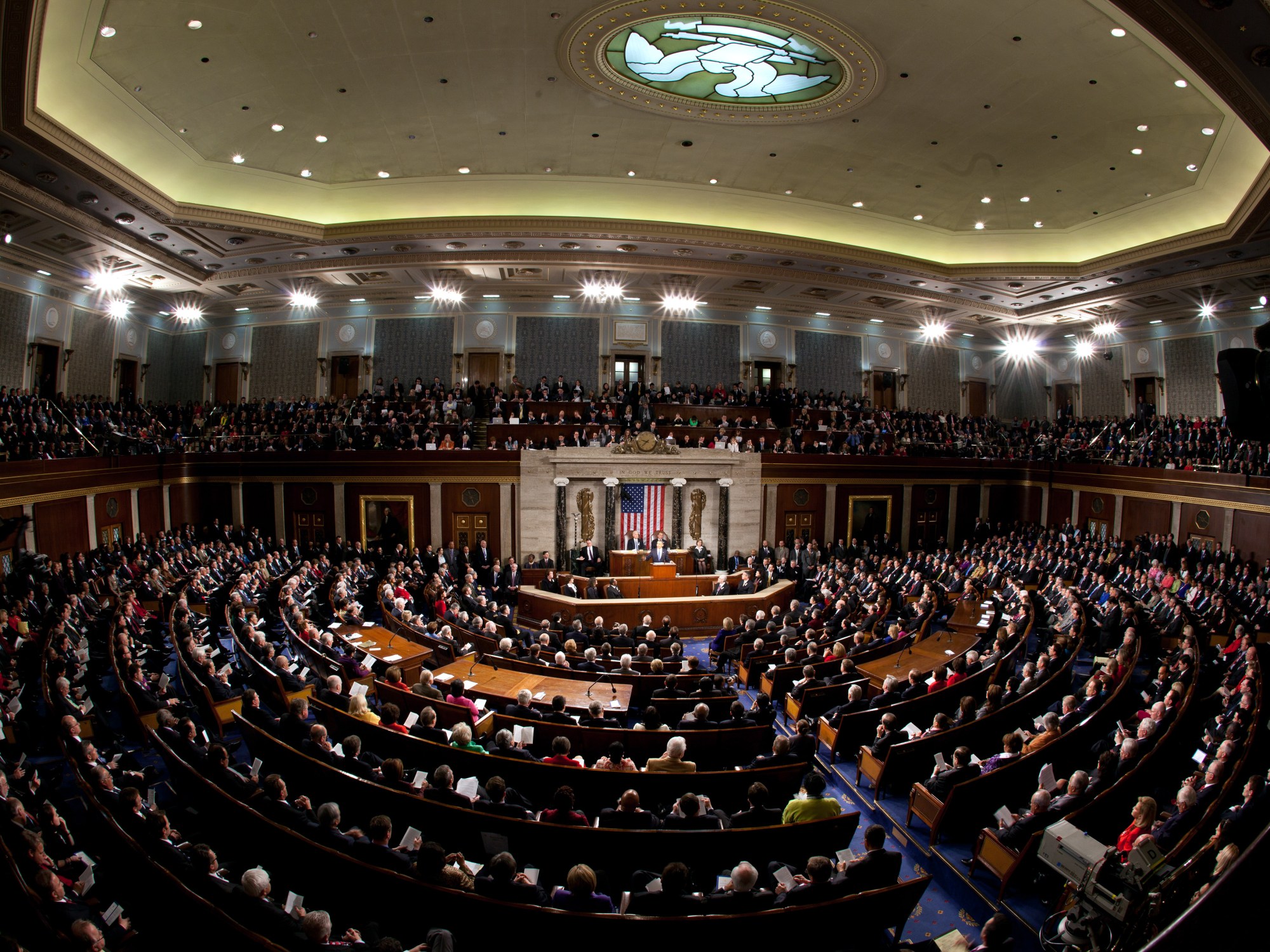
I really believe the creation of our government came out of a unique, once-in-a-century stroke of genius, positioned at the right time (after the French & Indian War), in the right place (thousands of miles from the seat of authoritative power), with a breath of Providence. Of course, it had been decades, or even centuries, in the making, but the timing seems to have been orchestrated perfectly.
And, in spite of warnings and stern advice to the contrary, we quickly developed a two-party system, that continues to serve as the unofficial, non-doctrinal spine of our country. And today, many say we have scoliosis. Especially today, when we hear our President present the State of the Union.
Honestly, with my personal convictions, I didn’t find anything worthy of goosebumps (good or bad) from President Obama or Senator Ernst. Both leaders shared their ideals and called out the other for failing to follow through on a commitment to collaboration. Of course, they did. I don’t say that cynically. Well, maybe a little, but really, it’s how the politics works. That’s why the applause and standing ovations for the President, had they been on a seesaw, would have gone nowhere. But, no pity for him, and no resentment for the Republicans; and no gloating for the Republicans, either.
There’s good cause for frustration. No one questions a poll that reveals that the Congressional approval rating ranges from a meagerly low 8 percent to a whopping 14.2 percent. Neither I nor anyone I know were polled, so the results could be slightly inflated. However, the sensationalism this bit of information steeps in is highly overrated. You have talks of another civil war and secession from one extreme and accusations of fascism from the other. Yes, sensationalism.
So, what is really happening in our country today? We can call it democracy, and attribute it to our democratic two-party political system. It doesn’t take but a quick Google search to see that political “hate speech” has been around since we had political debates. And, according to some, we aren’t even experiencing the worst of the worst.
So let’s dismiss the political fear-mongering. Now, what about old-fashioned cynicism? We don’t trust our politicians, even as we go to the polls to vote for them. Now, a lot of that is understandable, when you consider that indicted individuals get elected. One could say that experience breeds cynicism. I’d say that’s true—for a fool. I mean no disrespect, but really, why should our default be cynicism? I’m not advocating naiveté. Past experiences and observations should help us make healthy predictions and assumptions about our environment. But humans are incredibly adaptable. We live in every climate on the planet, and we can, on a dime, stick it to an unjust government and start anew on our own—and figure it all out as we go along. So, why can’t we take our experience and observations of our political history and strike at the root of our fatalist, cynical tendencies?
How do you change our politics? Well, there are elections, political pressure, and political movements for a start. These answers provide historic examples of how people either changed how politics worked, or even hijacked established political parties to promote their own agenda. We’ve seen that within the Republican Party over the past decade. Democracy works.
And that is why I am able to sit and watch a Presidential State of the Union, or a counter response, in peace and with relatively low blood pressure. Democracy works. And I believe that, when pressed, most people would agree. There is no alternative that many Americans would consider acceptable. So then, why do we complain of a political stagnation or paralysis? Theories abound, with some merit, but if we are to stay in step with the purpose of this blog, here’s another variable to complicate the issue.
The greatest stories of reconciliation and compromise arose out of necessity. While timing and location were crucial to the forming of our government, desperation was the ignition. Solutions to desperate situations often require a submission of will, and a difficult sidestep of our pride. I once had the privilege of listening to a nuclear terrorist expert with close familiarity with both leading parties on the issue share that, realistically, the best way to guarantee genuine international cooperation, would be to experience an external threat that brings desperation. His prediction is climate change will be that unifying external threat.
Perhaps we can use our vote, our minds, and our political prowess (yes, we all have some) to persuade our leaders to submit to compromise, honor, and integrity before desperation requires it. Yeah, I smirked, too. But I’m working on that.
 Unbreaking the News