
As it was explained to me during my International Relations courses in college, the West, especially the U.S., was on cloud nine after the collapse of the Soviet Union. We had won the Cold War, and the war over ideology, and we hadn’t fired a single shot (Ahem). Could this possibly be an era of peace, having outgrown, evolved beyond, wars? After all, democracy and capitalism were the only political and economic systems that were functional. Within five years, Samuel Huntington wrote a book that called out that naiveté –The Clash of Civilizations. We had quite a long history of imperialism, “soulless” capitalism, and cultural ignorance as the West wielded its influence across the globe so that everyone would agree with us in our success and arguable superiority (too harsh?). These bad seeds were bound to grow into something. The mistakes, both the ignorant and deliberate, would have consequences.
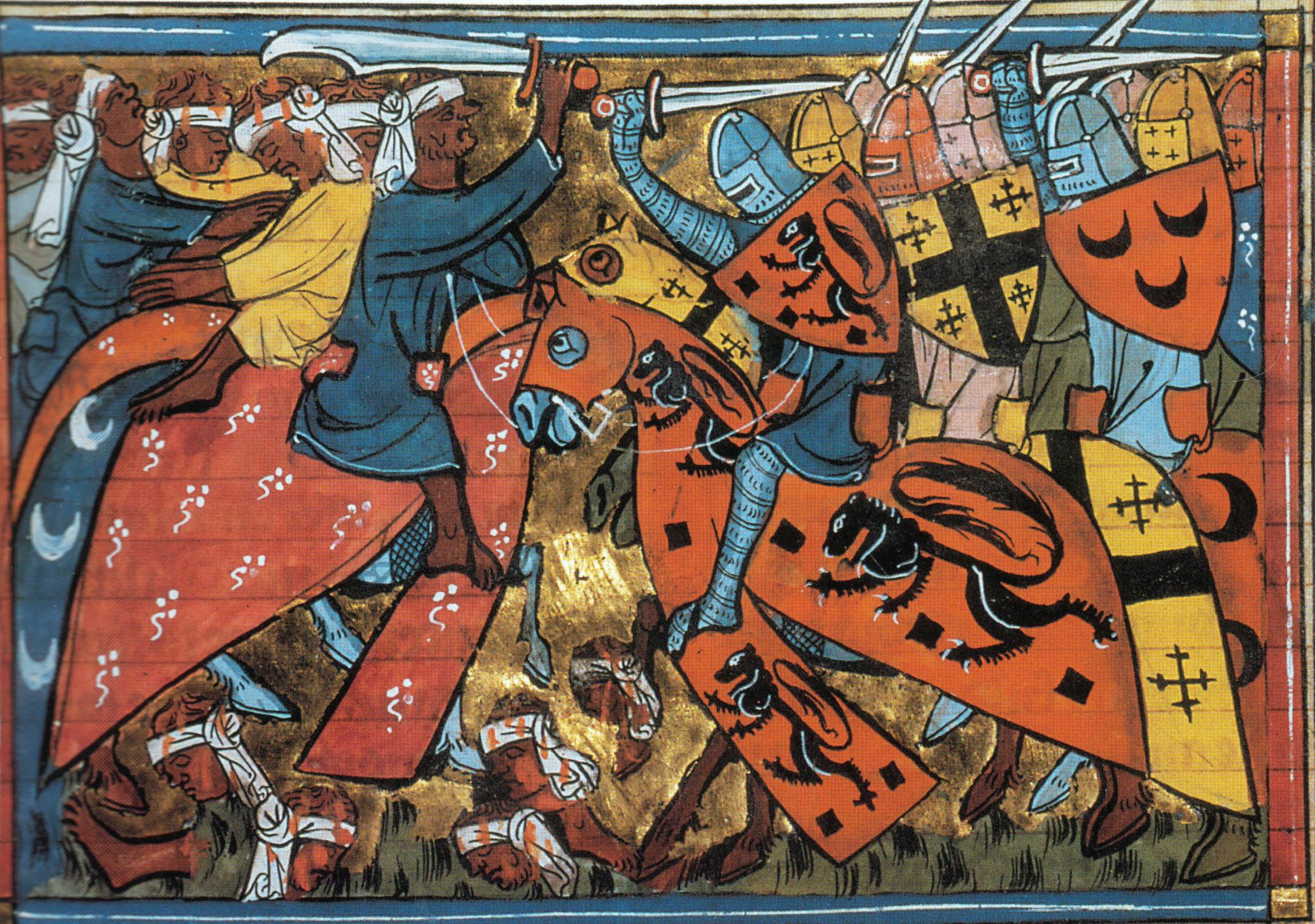
Civilizations have been clashing since there have been civilizations (no citation necessary). And at one point, while Christian Europeans clashed with Muslim kingdoms over Jerusalem (the Crusades), we came to appreciate their advancements in mathematics, literature, astronomy, and trading. When civilizations clash, there is war. Horror. Terror. But there has always been something to learn from our “interactions” as well.
Last night (January 6), I tried to write about the protests going on in Germany, but I really had nothing original to say. I just assume that every sane person would agree with me and cheer on local denouncements of the protests against “Islamization”. And then today the Charlie Hebdo satirical weekly is assaulted with such brutality and heartlessness, all to avenge their prophet. Clearly, there are the sensible arguments against the obvious perpetrators in both incidents, but there is so much more to all of these stories that link Germany, France, and other European countries, and our own country, and Muslim nations to a root of fear and intolerance while overlooking our mutual humanness. We say we know Germany’s history of intolerance, and in high school superficial history class terms, we do. But don’t forget the intense efforts taken to unify those German states into one nation in the 19th century as well as the competition they faced with other intensely nationalist countries in their neighborhood. It took a great deal of effort to create that sense of nationalism, so it would of course take more than a couple of generations to forcefully deconstruct that sentiment. Which might be why some extreme nationalist groups continue to pursue relevance. For generations
France has been using extreme, arguably inappropriate and harsh, satire to challenge those wielding too heavy of a hand on their behavior, morals, religion, and government. Charlie Hebdo was the product of generations of this kind of satire. And, of course, there is the argument that this is France–if people find their behaviors intolerable and offensive, why live there? They should not have been France at all if their secularism is offensive. France had spent hundreds of years held tightly under the thumb of forced religious deference. When they had an opportunity to be a republic and have their revolution, the intimate relationship between church and state was one of the first things to go. So no religion, especially a foreign one, could enforce respect.
And then there are rumors of dissolving the EU, raising up legislative walls along European countries’ borders, and preserving their respective heritages at all costs. And many Americans sigh in relief that we live so far away while cautiously eyeing Canadian and Mexican border posts, and they think of ways ways to make sure that America’s newcomers adapt accordingly. The efforts taken to create a culture, ideas, and norms are extensive. But at what point did we need to create the similarities between us?
Clearly, Huntington was on to something: our civilizations are clashing. Rather regularly, various parts of the world decry the West’s “soft power” and flinch at our economic and cultural “imperialism.” It is often in the name of these offenses that some of the worst attacks of recent terror have taken place (Though let’s not forget the political benefits various warlords, governments, and terror groups gain through terror. We cannot simply assume it’s only our ideas and beliefs they hate). And there are rumors that the Charlie Hebro attack will fuel anti-Islam sentiment throughout the west and possible retaliation. And there are concerns that there are more where these terrorists came from.
However, at the same time, there are 4.7 million Muslims peacefully living in in France (7.5% of the population), 4.1 million (5%) in Germany, and more than 2.5 million in the United States. In the United Arab Emirates, while there have been stories about the cultural differences “clashing” and leading to legal action, only 13% of the population are UAE nationals – 87 percent of the population are expatriates. Hundreds of nationalities manage to coexist. There must be some benefit to these civilizations “clashing.” Or perhaps this is what happens when they simply meet.
There are indeed rough edges to different groups merging, meeting, or clashing. Choose your verb. So what would be the appropriate action in response to German protests against “Islamization” or the terror released on Paris? A witch hunt? Less immigration? Dissolving agreements that open borders? Become less welcoming? Continue offending or killing one another? Or meet one another and learn to coexist? You can’t force evil to listen to a lecture or sit down for a rational debate. You can’t force evil to do anything. By forcing any act upon evil and darkness, you merely nourish its growth. But how do you abolish darkness? Turn on the light. We are enlightened when we meet others unlike ourselves. We learn and benefit from when civilizations meet, so why don’t we keep doing that in response to these acts of terror? Perhaps that can cause the evil to recede.
 Unbreaking the News
One thought on “The Meeting of Civilizations”