
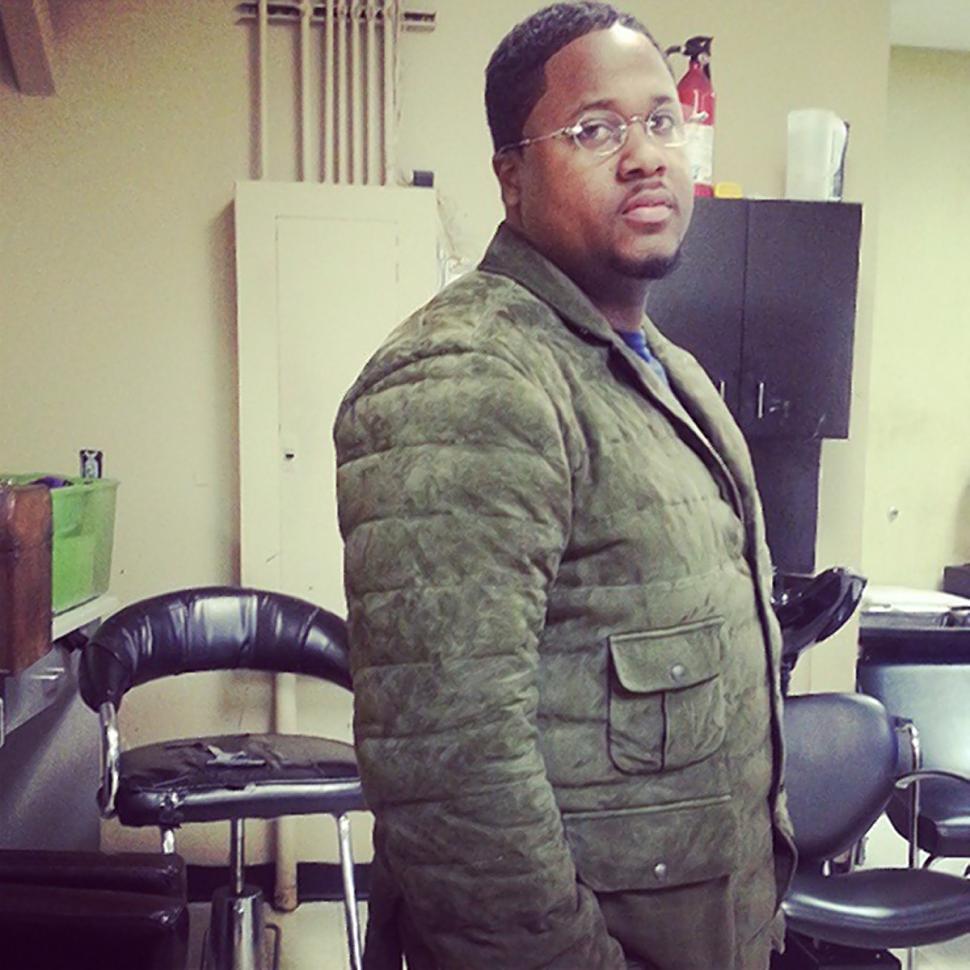
 Was Ismaaiyl Brinsley a terrorist? A “black militant”? A mentally ill young man who had access to a gun? I don’t know. I lean toward the latter, but any of these reduce a complex situation, a complex man to one label. We all hate labels, though we try to fit under as many as we can sometimes in an effort to fit in. Instead of lecturing on how labeling is bad, here’s an attempt to better understand what happened Saturday, December 20 in Bed-Stuy, Brooklyn, and how it is impacting us today.
But first, a brief preface:
In recent efforts to get this blog started, I have talked with a handful of friends/confidants about how to get started. It dates back to Michael Brown in Ferguson, MO. There was also the grand jury verdict in the Eric Garner case, and then the following protests. Honestly, by the time these “assassinations” took place, I felt the topic of racial issues too broad and too deep to start this blog. The news has saturated this one, but having finally found a title (“Unbreaking the News”), researching this one seemed imperative. But that is what most of this is: research. Expect no revelatory or redundant commentary. I’m researching this for you, with you.
Continuing on…
Today on NPR, I heard a brief by-the-way comment that was by no means the full topic of discussion, which turned out to be the rise of gangs in Hempstead, NY. The host asked his guest if the shooting of the police officers reflected more of the black militarism of the 1970s or of the mass shootings at Newtown, of Gabby Giffords in Tucson, etc. I felt briefly enlightened. And perhaps relieved. This is not a race issue after all, but an ill individual who had access to a gun. I could definitely blog that. Except it is not that simple. One label just isn’t enough.
Ismaaiyl Brinsley was an angry man. He was angry at cops. He was angry because of grand jury decisions in Ferguson and New York. He had known affiliations with a gang that planned vengeance against cops. But he was also a man with known mental health issues. Records indicate that he had admitted in previous run-ins that he had sought treatment for mental health issues. But if we go back further, the same New York Times article hyperlinked above mentions a childhood that one could describe as broken (See also the Huffington’s article here). If you look in one direction online, you also find reference to Brinsley being a Muslim and associating himself with radical Muslims, though I find that to be more Islamophobia-paranoia than reliable. And none of this covers every moment of a nascent, adolescent, or young adult life. We are missing so much.
So what we do with this information, or the lack thereof? Clearly, it is much more difficult to understand the cause and impact of this event in one context. Do we use this to further support or defend gun rights? Do we use this to fuel pro-cop or anti-cop arguments? Do we include this “data” in discussing the statistics of the impact of broken homes, poverty, or institutional racism? If you try to do any one of these things, I wish you luck and warning: using incomplete evidence is not too far from inaccurate or deceptive evidence. When teaching any event in history, I often face this dilemma. How do you teach King Louis XVI’s disregard for reforms prior to the Revolution without mentioning the second-guessing he had, or his great-grandfather’s decision to consolidate his power, creating a culture of absolutism that #16 inherited, arguably, innocently? Random history lesson interjected there, but the point remains the same: considering Brinsley as only a terrorist or a black militant or a mentally unstable individual restricts what we need to learn from this atrocity. The information will be incomplete, and therefore inaccurate. Turning your back to a mayor ignores the fact that an unstable man who could not manage anger healthily was around at the same time of racial, social, and political unrest. And focusing on the issue that he was an unstable man ignores the fact that he was around at the same time of racial, social, and political unrest. Is this making sense? “Micronews” may be easier to understand and offer 90-second sound bites while “macronews” may be too complex and might require degrees in multiple disciplines. However, should that justify an incomplete understanding of what we are currently experiencing?
 Unbreaking the News